.

Showing posts with label IAWF. Show all posts

Tuesday, March 3, 2009

10th Wildland Fire Safety Summit

The International Association of Wildland Fire is putting on:

The 10th Wildland Fire Safety Summit, “10 Years after the TriData Study: What is different?”
April 27-30, 2009, Phoenix, Arizona
Embassy Suites North Phoenix Hotel

To register or to find out more:
http://www.iawfonline.org/phoenix

Early registration ends March 15, 2009 - deferred credit card payment options available

In the mid-1990s, the interagency Wildland fire community commissioned the groundbreaking Wildland Firefighter Safety Awareness Study. The final TriData report, released in 1998, made specific recommendations for implementing cultural changes for safety in the areas of culture, leadership, fire management, training, human factors, and organizational learning, to name a few. To revisit the impact of this landmark initiative, a major emphasis of the 10th Wildland Fire Safety Summit will be:

“10 Years after the TriData Study: What is different?”

Who should attend

* Agency Administrators
* Fire Aviation Specialists
* Fire Managers
* Fire Researchers
* Firefighters
* Incident Commanders
* Land Managers
* Public Officials
* Social Scientists
* Students of Fire

Areas of interest and research

* Aviation safety on wildfire operations
* Issues in wildfire safety around the world
* Safety in the Wildland-Urban Interface
* Advances in Wildland firefighter safety
* Research, practices, training, and equipment
* Case studies and lessons learned
* Firefighter liability
* Human factors in the fire organization
* Firefighter health and fitness
* New approaches to investigation and
* Learning from close calls
* Policy, practices, and procedures
* Post-Traumatic Stress

Featured Speakers
Program

Monday, November 10, 2008

Wildfire news, November 10

Call for papers, 10th Wildland Fire Safety Summit

The International Association of Wildland Fire has extended their call for papers for the next Safety Summit. The new date is November 30, 2008. More information is here.


New homeowner wildfire preparation guide

There are a number of publications available for the public that explain what they can do to be prepared before a wildfire strikes. The San Diego County Fire Chiefs' Association and the San Diego-based Burn Institute just created a new, very professional guide that is available to be distributed for individual personal use.

Friday, September 26, 2008

The fires next time

From New West

Wildland Fire Conference
The Fires Next Time

By Scott McMillion, 9-26-08


Think about wildfire in the West and it’s hard to picture a rosy future, except for the sunsets bleeding through the smoke.

Climate change is creating longer, hotter, more explosive burning seasons, while more and more homes sprout on flammable ground. Meanwhile, the pool of firefighting talent keeps getting smaller: there are fewer trained crews, air tankers and helicopters available than there were 20 years ago. Complicated and sometimes contradictory federal policies make it difficult for the next generation of firefighters to get the training and experience they need.

And for those who do meet the requirements for this dirty and dangerous work, there’s a new specter searing the mind of fire bosses: criminal prosecution if something goes wrong and firefighters are hurt or killed.

While fire is increasingly – and properly – understood as a necessary part of many functioning ecosystems, controlled burning is a complicated and sometimes dangerous process. Fire managers often are reluctant to start fires or let natural fires burn, because an escape could leave their careers in ashes, or at least well toasted.

Those were some of the topics outlined this week at a four-day conference in Jackson, Wyoming, sponsored by the International Association of Wildland Fire and the National Park Service, an event that drew about 400 firefighters, scientists and officials from land management agencies. While most are from the United States, some came from as far as Australia, Japan and Portugal.

The focus of the conference was the 20th anniversary of the 1988 fires in Yellowstone National Park, which many described as the onset of a new era in firefighting and fire management.

“Nature is not always a gentle hostess,” recalled Bob Barbee, the park’s superintendent at the time. He called the fires of that summer “unpredictable, unpreventable, uncontrollable and finally unimaginable.”

Fires that year scorched 1.4 million acres in and around the park, while torching another million acres in other places around the West.“It was the first time in my career I saw the world’s best firefighters get their butts kicked,” said Rex Mann, a planner in the Yellowstone firefighting efforts. The fires “were beasts the like of which we’d never seen before.”

But the beasts still roar. Fires of similar intensity have erupted across the West over the past two decades, from Colorado to California, from Arizona to Montana. Today’s rookie firefighters are seeing things that veterans of previous generations thought they’d never encounter. And the monsters could grow even bigger.

“We continue to exceed our previous standards, in terms of unbelievability, in fire behavior,” said Steve Frye, a former commander of an elite Type I firefighting team.

If the climate scientists are right – there were a number of them here, and they all had a similar message – future firefighting will require two times the muscle and machinery just to wrestle fires down to current levels, Frye said. If the tools and people materialize, they won’t be cheap. Firefighting has often cost the U.S. Forest Service more than $1 billion a season in recent years, draining money from other programs.

And some fires will escape no matter what people throw at them. It is “reasonable to consider” fires of three million acres to nine million acres in the northern Rockies if the right conditions arise, according to George Weldon, deputy regional director for fire for region one of the Forest Service, headquartered in Missoula.

He called for agencies and the public to learn to live with fire. “The fires are not the problem,” he said. “The problem is the effect of the fires on the people.” Those effects can include sick-making smoke, travel restrictions, lost property, injury and, occasionally, death.

So, what can be done?

Weldon predicted that land managers will rely increasingly on planned or “prescribed” fire as a tool that can sap the punch from inevitable wildfire. Chainsaws won’t do the trick, at least not everywhere. “The Forest Service will not log our way out of the issue we’re in,” he said. “Our primary tool is going to be fire.”

But using fire, instead of fighting it, won’t be easy, especially if the woods become even more flammable. There is resistance both from the public and from people inside government. This year, the federal government oversaw 211,000 acres of prescribed burns, according to Tom Nichols, chief of fire and aviation for the National Park Service. But there were 4.6 million acres of wildfires.

Aside from the technical challenges, there is even disagreement over what to label a fire you aren’t trying to put out. The “let burn” label still rankles many in the Park Service. A “wildland fire use fire” is unwieldy and confuses the public. And a new term, “appropriate management response,” while it has the support of some scientists and green groups, sounds even more bureaucratic.

At the simplest level, the latter term means officials will look a fire over, then decide whether to fight it or monitor it, relying on a set of preset parameters. The response will depend on circumstances like topography, weather and potential threats. But even that process can suffer from political interference.

This year, when thousands of fires erupted in California, “prescribed fire was out the window,” Nichols said.

Other areas of government harbor inconsistencies as well. The Occupational Safety and Health Administration (OSHA) interprets the law to mean everybody is warranted a safe workplace, according to Assistant U.S. Attorney and former firefighter Mike Johns. Yet the Forest Service grants firefighters hazard pay, which implies acceptance of danger.

Even the Department of Justice is divided. Lawyers working on civil cases see firefighting safety rules as “guidelines” while criminal lawyers cited those same rules when they filed manslaughter charges in the wake of the 2001 Thirtymile Fire in Washington. “There’s a huge disconnect in the legal environment we’re currently dealing with,” Johns said. The Thirtymile charges were later reduced to misdemeanors, but the incident cast a pall over the fire community.

“Firefighters are starting to wonder if their agencies are willing to back them up if something goes wrong,” Johns said.

Dick Mangan, past president of the wildland fire association and a firefighter for more than 30 years, said one third of that group’s members said they would be reluctant to take on some supervisory roles in the wake of the criminal charges.

“We’re having a hard time getting people to take crews out,” he said. “We’re on a dangerous path here. I don’t like the future, guys. I don’t think it’s that bright right now.”

Thursday, September 25, 2008

Wildfire news, September 25

"Pyro diversity"?

We have worked with 'ologists of all types while managing fire programs and writing Environmental Assessments, Fire Management Plans, and Prescribed fire plans. And we have been in discussions about plant diversity, uneven-aged stands, and burn mosaics. But the term "pyro diversity" is new to us.

From necn.com, in an article about some prescribed fires being planned by The Nature Conservancy in Maine:
Fire scientists have a saying: Pyro diversity is bio-diversity, which means they want different levels of fire to create different habitats for plants and animals.
The concept is familiar, but apparently "fire scientists" have coined a new term to be added to the lengthly list of wildland fire jargon.

Tenth Wildland Fire Safety Summit

The International Association of Wildland Fire is planning another in its series of Wildland Fire Safety Summits. The last one was in Pasadena in 2006 and this next one will be in Phoenix April 28-30, 2009. A major emphasis of the conference will be "10 Years after the TriData Study: What is Different?" Other topics include:
  • Aviation safety on wildfire operations
  • Issues in wildfire safety around the world
  • Safety in the Wildland-Urban Interface
  • Advances in wildland firefighter safety research, practices, training, and equipment
  • Case studies and lessons learned
  • Firefighter liability
  • Human factors in the fire organization
  • Firefighter health and fitness
  • New approaches to investigation and learning from close calls
  • Policy, practices, and procedures
More information, including a call for papers, can be found on the IAWF web site.

History of the Wildland Fire Safety Summit

2006 9th Wildland Fire Safety Summit™
Pasadena, California, USA
2005 8th Wildland Fire Safety Summit™
Missoula, Montana, USA


2003 7th Wildland Fire Safety Summit™
Toronto, Ontario, Canada
2002 6th Wildland Fire Safety Summit™
Luso, Portugal
2001 5th Wildland Fire Safety Summit™
Missoula, Montana, USA
2000 4th Wildland Fire Safety Summit™
Edmonton, Alberta, Canada
1999 3rd Wildland Fire Safety Summit™
Sydney, Australia
1998 2nd Wildland Fire Safety Summit™
Winthrop, Washington, USA
1997 1st Wildland Fire Safety Summit™
Rossland, British Columbia, Canada


More details about fire funding

The $910 million in federal fire funding approved by the House of Representatives that we reported on Wednesday would replenish the budgets of the U.S. Department of Interior agencies and the Forest Service for this fire season. It still must be approved by the Senate and signed by the President, but it would include:
  • $610 million for wildfire suppression;
  • $125 million for State and private lands fuels reduction;
  • $100 million for rehabilitation;
  • $50 million for Federal lands fuels reduction; and
  • $25 million for firefighter recruitment and retention in high-risk areas.
Some of the federal agencies exhausted their fire funds this summer and had to shut down non-fire projects, such as construction, fuels reduction, and recreation related activities.

On a related topic....

Senator Diane Feinstein of California issued a press release saying that she has called for:
  • The U.S. Forest Service to bring its California firefighting corps to full staffing. Before the fires began, the Forest Service had 380 vacancies out of a total force that should be 4,432 - a vacancy rate of 8.5 percent. Senator Feinstein is urging that all firefighter vacancies be filled, and that Forest Service firefighter pay and retention issues be resolved.
  • The permanent stationing of two military C-130H tankers at Point Mugu. Earlier this year, Senator Feinstein asked the President and Secretary of Defense to station these tankers at the California air base so they can attack new fires early.
Photos of Truckee Marsh fire

It was stopped at only 1.5 acres, but the fire in the Lake Tahoe area looks larger than that in the excellent photos captured by Dan Thrift of the Tahoe Daily Tribune. Here is one, but check out the slide show at the bottom of the article.

Wednesday, September 24, 2008

Wildfire news, September 24

House approves $900 million for firefighting

The Associated Press
Article Launched: 09/24/2008 03:01:46 PM PDT


WASHINGTON—The House of Representatives has approved over $900 million for firefighting measures nationwide as part of a massive year-end budget bill.

Included is $610 million for fighting fires, $175 million to get rid of dry brush and other fire fuels, $100 million for rehabilitation and $25 million for firefighter recruitment and retention.

The money was sought by Senator Dianne Feinstein in the wake of lightning-sparked fires in Northern California this summer that charred thousands of acres across the region.

The money is part a $630 billion-plus spending bill. It still must pass the Senate.


Yellowstone Conference

The IAWF/NPS conference, "The '88 Fires: Yellowstone and Beyond", started Tuesday in Jackson Hole, Wyoming. Hampered at the last minute by a ban on travel by the U.S. Forest Service, they expect to have 400-500 people there to talk about those fires 20 years ago, and where we go from here.

Rocky Barker, a reporter with the Idaho Statesman and author of "Scorched Earth: How the Fires of Yellowstone Changed America", is one of the speakers and has an article in the Wednesday edition of his paper. You should read the whole article, but here is an excerpt:
....Today, when a new fire is reported, a ranger decides either to put it out as fast as possible or, if it was started by lightning, he could declare it a "fire-use fire," such as the South Barker fire near Featherville. There, firefighters act like peacekeepers, monitoring the fire so that it reduces fuels, improves habitat but doesn't destroy homes, historic cabins or key wildlife features.

But managers want a clear system that allows them to use many different strategies on fires, even if they were started by people. Explaining this new policy and building public support is the key, said Tom Nichols, the National Park Service director of fire and aviation at the National Interagency Fire Center.

So is planning, so managers know before a fire strikes what they want to accomplish across the landscape.

"If we are going to put firefighters in harm's way, we are going to optimize what we put them there to do," Nichols said.

Yellowstone officials did not expect the low humidity, the hot weather and most of all the repeated windy days that made the 1988 fires so fierce. They only stopped Sept. 10 when rain and snow finally came.

Politicians and local officials called for the firing of both Daniels and Barbee in 1988. But they both survived and thrived as the public began to recognize the fires were renewing the lodgepole pine forests that burned.

[...]

One after another, fire bosses from the 1988 fires told of how their own views were changed by the size, scale and scope of the 1988 fires. Most of all they spoke with humility.

"Eighty-eight was the first time I saw the world's best firefighters get their butts kicked," said Rex Mann, who was an area commander over dozens of fire crews during the Yellowstone fires.

He and others spoke of how they first saw the extreme fire behavior we now take for granted. But eight of the last 10 years have been worse fire years than that seminal year - despite firefighting agencies spending billions of dollars a year and extinguishing 98 percent of all fires.
California: Serial arsonist in Murrieta

An arsonist set six vegetation fires in Murrieta within a 24-hour period, according to spokespersons from the police and fire departments. The largest was 10 acres.

Fire management at Lake Tahoe

Wildland fire at Lake Tahoe, on the California/Nevada border, has been a hot topic for the last few years. They have had their share of fires, smoke is always an issue, and many of the residents are hesitant to create a fire safe barrier around their house or vacation retreat by cutting down a tree or two.

Terri Marceron, the forest supervisor of the Lake Tahoe Basin Management Unit of the U. S. Forest Service, wrote a very clear and lucid article for the Tahoe Daily Tribune that explains the current fire management issues and practices.

More agency administrators should do this.

Tuesday, September 16, 2008

Wildfire News, September 16

Satellite Phone Surge

Satellite telephones are no longer rare in emergency management. Here is an excerpt of an article from Forbes.com:
Greg Ewert lives in Maryland, but Hurricane Ike has been keeping him up at night.

As executive vice president of global channel distribution for Iridium Satellite, Ewert aims to make sure that organizations ranging from the Red Cross to the Federal Emergency Management Agency (FEMA) have ready access to his firm's satellite phones.

The job has been getting tougher. Hurricanes Gustav and Ike have swelled demand, prompting Iridium to ship 6,200 phones over the past three weeks. Last week, as Ike bore down on the Texas coastline, the firm's call traffic in the region tripled. Two weeks ago, when Gustav swiped New Orleans, the company's Louisiana traffic doubled.

"Three different areas in the southern U.S. have been affected in the last 30 days," says Ewert. "We're calling into service more equipment than we have in past years."

So far, Iridium has managed to meet demand. The company's policy of keeping three months' inventory of phones prepared it for the recent run on handsets. It has been routing calls the way it normally does: through its network of 66 satellites and down through a "gateway" station in high-and-dry Tempe, Ariz. This sky infrastructure insulates Iridium's system from whatever is happening on the ground, be it a hurricane, earthquake, wildfire or civil uprising.

The hurricanes, grim as they are, highlight Iridium's recent achievements. Its frothy rise under Motorola (nyse: MOT - news - people ) and subsequent $5 billion bankruptcy in the late 1990s led many to write it off as a costly flop. New management and foreign investors resuscitated the company in 2000 as Iridium Satellite.

Iridium's goals have since come down to earth. It has 305,000 subscribers--much fewer than the 1 million it once pursued but enough to make it the world's fastest-growing mobile satellite services provider. Frost & Sullivan has declared Iridium's service more reliable than that of its closest competitor, Milpitas, Calif.-based Globalstar (nasdaq: GSAT - news - people ), for the past two years.
Cellphones used for emergencies

And speaking of emergency communication, Forbes has another article about the usefulness of cell phones to provide important information during emergencies. Here are some excerpts:
The Federal Communications Commission is developing a national mobile alert system for 2010. The messages, which will be distributed through the country's four largest carriers AT&T, Verizon, Sprint Nextel and T-Mobile will include "presidential" or national emergency alerts, weather and local emergency alerts and child abductions. In a statement, FCC commissioner Michael J. Copps praised the ability of mobile alerts to reach people who aren't near a TV set or radio or lack electricity.

The move follows the FCC's attempt to establish a public safety communications network on radio spectrum auctioned earlier this year. Such a network would enable police and emergency workers across the country to seamlessly communicate on wireless devices. The FCC has said it hopes to establish such a network within the next few years.
and...........
Mobile alerts--messages moving the other direction--are another way cellphones can save lives. Manhattan-based Send Word Now delivers millions of mobile alerts a year for corporate, academic and public sector clients including Wal-Mart, Boston University and the U.S. Postal Service. New York City is testing a Send Word Now program that combines emergency notifications with everyday warnings, such as traffic. Text alerts have been growing in popularity for the past two years, says chief executive officer Tony Schmitz. Reliability and speed are factors. Even when phone lines and cellular networks are clogged with traffic, text messages tend to get delivered, within minutes.

......Advocates say that mobile safety functions are getting smarter and more specific. Send Word Now can program messages to be distributed automatically as soon as its software detects an event or disaster, speeding up the process and removing human error. Some firms are attaching documents to text messages--perhaps a floor plan for evacuation or a list of emergency procedures for employees to follow.
Yellowstone conference

Even the Associated Press has picked up on the conference which begins on September 22 in Jackson Hole, Wyoming.
YELLOWSTONE NATIONAL PARK, Wyo. (AP) An international "Who's Who" of wildland fire management and science is set to gather in Jackson, Wyo., later this month to look back at the 1988 fires in Yellowstone National Park and the northern Rockies.

"The '88 Fires: Yellowstone and Beyond" is the subject of the park's Ninth Biennial Scientific Conference, to be held in Jackson from September 22 to 27.

Featured speakers include Norm Christensen, professor of ecology and founding dean of the Nicholas School at Duke University; Tom Zimmerman of the U.S. Forest Service Rocky Mountain Research Station; Cathy Whitlock of Montana State University; retired Yellowstone Superintendent Bob Barbee; Steve Frye of the Montana Department of Natural Resources and Conservation; and John Varley, executive Director of the Big Sky Institute at Montana State University.

Rescued bear update

CBS13 has an update on the bear cub that was rescued after being burned on a fire in northern
California.
Li'l Smokey," a black bear cub rescued by a firefighter while fleeing a Northern California wildfire, has taken a major step in his recovery.

The bear cub is now walking on bare paws! Doctors have decided to give Lil' Smokey a trial at walking around without bandages or booties on his burned paws. Workers at the Lake Tahoe Wildlife Care center say his paws are a bit red but that's to be expected.

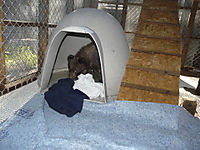
Smokey has also been moved to a new bigger cage with one screened side that means
he will be subjected to the natural weather outside. He also has a small igloo so he can "cozy down". Workers say he's already moved all his favorite toys and blankets inside the igloo.

Lil' Smokey now weighs 35.2 pounds meaning he's gained almost 25 pounds in the 8 and a half weeks at the center.

Doctors are also more optimistic that Smokey will actually be released back into the wild.

The cub, rescued by firefighter Adam Deem from a the "Moon Fire" near Redding on Thursday, July 17, likely stepped on scorching ground, and may have been burned by the flames.
Check out Smokey's blog.

NPR Series on fire in Yellowstone

National Public Radio's "Weekend Edition" is doing a series of five reports on fire in Yellowstone National Park called "Evolution of a National Treasure". Each one has a fairly short written version available on the Internet and also a 3 to 9 minute audio version. Four episodes are available so far:


Russians suspected in Georgia fire

Wildfire Today covered a similar incident on August 25, and it has apparently happened again. From UPI:
TSAGVERI, Georgia, Sept. 16 (UPI) -- Georgia says it has formed a commission to investigate whether Russian soldiers purposely started a forest fire in a popular national park.

Some witnesses near the Borjomi-Kharagauli National Park said they saw a
helicopter in the area on Aug. 15, only hours before Russia and Georgia signed a cease-fire halting the military conflict. Some said they saw "burning things" being dropped from the chopper onto the park, The Washington Post reported Tuesday.

The Georgian government commission says it will investigate if Russia deliberately started the forest fire, which has burned 2,500 acres of old-growth forest and crippled a major tourist attraction.

"I believe that yes, (the Russians) did it," said Revaz Enukidze, an official with Georgia's Environment Ministry, adding he thought the fire was started "to make as much as possible the economic and moral damage before the cease-fire."

"They know that this place is the treasure of the country," Natia Muladze of the park's visitor services told the Post. "Borjomi was full of Russians during the Soviet times, and they wanted to destroy the things which they could not take."
California: fire caused by marijuana farmers

I don't understand why fires caused by pot growers are so common. If you're doing something illegal, why start a fire that brings attention to what you're doing, shuts down your operation, and may lead to your arrest? But pot growers on public land are usually not the sharpest tools in the shed to start with. And, they are probably using "disposable" workers that are in the country illegally.

From CBS47.tv:
Madera County Sheriff's investigators say the wildfire burning near North Fork was caused by a sophisticated marijuana growing operation.

Investigators working on the Cascadel Fire discovered about 6,000 plants in multiple plots in the area. They also found a number of dead fish they suspect died from chemicals from the pot farm leaching into the pools.

Narcotic agents removed two pounds of processed marijuana and a total of 5,918 budding plants, with a combined street value worth nearly 18 million dollars.

The fire is now 70% contained and has already scorched 280 acres. Helicopters are still being used to drop water on hot spots but crews expect the blaze to be contained sometime on Tuesday.

Monday, July 21, 2008

Wildland fire conferences

Three major wildland fire conferences organized by the International Association of Wildland fire and others are on the horizon.

The '88 Fires: Yellowstone and Beyond, September 22-27, 2008, Jackson Hole, Wyoming. The IAWF in association with the 9th Biennial Scientific Conference on the Greater Yellowstone Ecosystem will be sponsoring a major Conference to remember the events of the Yellowstone area fires of 1988. The last day for reduced registration rates is July 25.

Aerial Firefighting Conference, October 21-22, Athens, Greece. This is the first conference to focus its attention on technologies and operations of aerial fire fighting, fixed and rotary-winged.

Tenth Wildland Fire Safety Summit, April 28-30, 2009, Phoenix, Arizona. This conference continues the tradition begun by the IAWF in 1997 to provide a forum for sharing the latest developments in wildland firefighting safety. A call for papers has been issued.

In the mid-1990s, the interagency wildland fire community commissioned the groundbreaking Wildland Firefighter Safety Awareness Study. The final TriData report, released in 1998, made specific recommendations for implementing cultural changes for safety in the areas of organizational culture, leadership, fire management, training, human factors, and organizational learning, to name a few. To revisit the impact of this landmark initiative, a major emphasis of the 10th Wildland Fire Safety Summit will be "10 Years after the TriData Study: What is different?" Other topics will be covered also.

These conferences, historical wildland fire events, and other notable dates of interest are on the Wildland Fire Event Calendar. If you have not seen it, it's worth a visit.

Wednesday, July 2, 2008

Firefighters' liability

The Bozeman Daily Chronicle has a lengthy article about the modern-day realities of fighting fire in our liability-ridden, wildland-urban interface choked climate today. Here is a brief excerpt.

Dick Mangan has fought fires around the country for 40 years and can wear a number of hats: operations chief, planning chief and safety officer.

He’s also past president of the International Association of Wildland Fire, a professional association with thousands of members. He knows his business.

But these days, when he goes on a fire, his wife issues a warning.

“My wife tells me, ‘Don’t do something stupid. I don’t want to lose the house,’” he said.

Like many fires bosses, Mangan has a new concern: personal and legal liability if something goes wrong and lives or property are lost.

The issue got serious in 2006, when Ellreese Daniels was charged with four counts of involuntary manslaughter and three other felonies, five years after four people under his command died in the Thirtymile fire in Washington.

The charges were later reduced and Daniels has pleaded guilty to two misdemeanor counts of making false statements to investigators. His sentencing is scheduled for July 23.

But the event cast a pall in command tents at fire camps across the nation.

“It puts a very, very dark cloud over everybody in the fire community,” said Mangan, of Missoula.
Photo of Dick Mangan, by Bill Gabbert, at the 2006 Wildland Fire Safety Summit, Pasadena, CA, put on by the International Association of Wildland Fire

Wednesday, May 28, 2008

10th Wildland Fire Safety Summit

The International Association of Wildland Fire announced today their preliminary plans for a Wildland Fire Safety Summit next year. For this 10th conference in the series, they are still negotiating with a venue, but it is expected to be in Phoenix, April 28-30, 2009. Dick Mangan will be the IC or Chair.

Major emphasis areas for the Safety Summit will include:
1. 10 years after the Tri-Data Study: what is different?
2. Aviation Safety on Wildfire Operations;
3. Issues in Wildfire Safety around the World;
4. Safety in the emerging Wildland-Urban Interface.
5. New research in Wildland Fighter Safety practices, training and equipment
6. Firefighter Health and Fitness
If you would like to help put the conference together, contact Dick Mangan at:
blackbull at bigsky.net

They will issue a call for papers later.

Monday, May 12, 2008

"Wildland Firefighter" demobilizes

Wildland Firefighter magazine just announced in it's May issue that it is ceasing publication. It will no longer exist as a stand-alone publication dedicated to wildland fire. In a publisher's note, Jeff Berend, the Vice President and Publisher said:
"Beginning in June, we will be merging Wildland Firefighter into a new Wildland/Urban Interface (WUI) section in FireRescue magazine.....

But from a business perspective, we simply have not been able to grow the readership or advertising beyond that loyal core. At the same time, publishing costs have risen at unprecedented levels."
Wildland Firefighter and FireRescue are both published by Elsevier Public Safety. Wildland Firefighter became the "official publication of the International Association of Fire Chiefs" a couple of years ago after the IAFC severed their relationship with Fire Chief magazine.

This leaves Wildfire magazine, an "official publication of the International Association of Wildland Fire" as the only remaining magazine-type publication dedicated solely to wildland fire. The IAWF also publishes, through CSIRO Publishing, the International Journal of Wildland Fire, a professional journal containing peer-reviewed papers on the subject of wildland fire.

In the interest of full-disclosure, for the last 3 years I have been the Executive Director of the IAWF. Since January I have been helping the Board of Directors find a replacement so I can concentrate on other pursuits.

Tuesday, March 25, 2008

Ellreese Daniel's trial

As you probably know, Ellreese Daniels was the Crew Boss and Type 3 Incident Commander on the Thirtymile Fire near Winthrop, Washington in 2001 on which four members of his crew were overrun by fire and died. On January 30, 2007 the U.S. Attorney in Spokane, Washington charged him with four counts of involuntary manslaughter and seven counts of making false statements.

On February 20, 2007, the IAWF released a survey of 3,362 firefighters which showed that 36% of the full-time wildland firefighters surveyed will make themselves less available to be assigned to wildland fires as a direct result of these federal charges.

Here is an update from Wildlandfire.com
"I met with Ellreesse's Federal Public Defender Tina Hunt here in Missoula on Thursday: she seems well prepared for the May 5th trial date, and hopes that the Judge will approve a site visit for the jurors. We talked about many of the issues that are well known to all of us, as well as some tactics and qualifications issues. Tina still expects a 6+ week long trial.

There will be lots of witnesses, especially on the Government side, telling their stories about what they saw, heard, were told, experienced. The 10/18 will be an important focus!
Maybe by July 1st, we'll have a clearer picture of the impacts of this attempted mis-carriage of justice. Tina was highly complimentary of many of the R-6 Fire Overhead that she has interviewed.

She encouraged firefighter attendance in support of Ellreese at the trial, yellow Nomex shirts and all!

Keep the Faith!

Dick Mangan"

Monday, January 14, 2008

IAWF Looking for Executive Director

After serving as the Executive Director of the International Association of Wildland Fire for three years, I have decided to retire (again) and concentrate on things a retired guy is supposed to spend time on, like traveling, motorcycles, and photography. And wildfire blogs. My last day with the IAWF will be March 31, (but this blog will continue, as always, not affiliated with the IAWF). More information about the job vacancy can be found HERE.

The IAWF is a dynamic organization serving the wildland fire community. It could be a great job for someone with both organization management experience and a fire background. We have managed to double the membership in three years and are doing more to support wildland fire such as offering scholarships , helping to support the Wildland Firefighter Foundation, monitoring wildland fire legislation, issuing position papers, establishing a Wildland Fire Event Calendar, conducting surveys on important issues, increasing the publication frequency of the International Journal of Wildland Fire, and putting on a variety of well-attended conferences.

Tuesday, January 8, 2008

Wildland Fire Scholarships


The International Association of Wildland Fire just sent out this announcement:

"In 2008 the International Association of Wildland Fire (IAWF) will be again awarding two graduate-level scholarships each valued at $2,500USD to Master of Science (M.Sc.) or Ph.D. students studying wildland fire or wildland fire-related topics. These scholarships are not intended for Masters of Forestry degrees in wildland fire or for non-thesis graduate programs.

One of the two scholarships will be awarded to a student from the United States or Canada, and the other will be awarded to an individual from outside of these two countries. The application period will open January 15 and close March 31, 2008. Award winners will be announced the following May.

For more information, including how to apply, see the web site"